
설명
30만 개 이상의 워드프레스 사이트에서 신뢰받고 있으며, 450개 이상의 5성급 리뷰를 받아 4.9점의 평점을 기록했으며, 10년 이상 활발히 개발되어 왔고 15개 이상의 언어로 번역되었습니다.
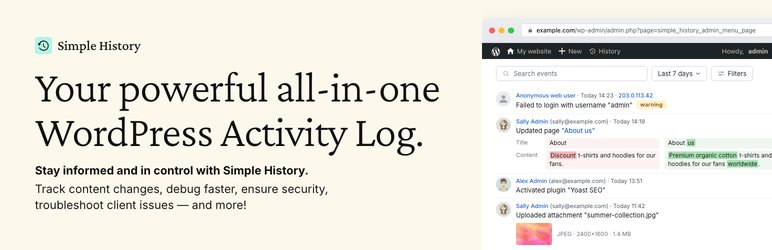
Simple History는 워드프레스를 위한 완벽한 감사 로그입니다. 콘텐츠 수정, 사용자 로그인, 플러그인 업데이트, 보안 이벤트 등 모든 중요한 변경 사항을 추적하므로, 사이트 관리자, 팀, 대행사 및 개발자는 누가, 무엇을, 언제 수행했는지 항상 파악할 수 있습니다. 설치하고 활성화하기만 하면 되며, 별도의 설정은 필요하지 않습니다.
모든 이벤트는 읽기 쉽게 작성됩니다. “회사 소개” 페이지 업데이트와 같은 쉬운 표현, “5분 전”과 같은 상대적 타임스탬프, 그리고 원시 데이터의 나열 대신 ‘이전/이후’ 비교가 사용됩니다.
🔍 심플 히스토리가 실제 상황에서 도움이 되는 방법
사이트에서 일어나는 일을 추적하세요 “오늘 누가 무슨 일을 했을까? 아, 사라가 새 보도자료를 업로드하고 관련 기사를 작성했네. 좋았어 — 이제 내가 할 필요가 없겠군.”
문제를 식별하고 더 빠르게 디버깅하세요 “어제부터 사이트가 느리게 느껴지네요. 누군가 특별한 작업을 했나요? … 아, 스티븐이 ‘나쁜 플러그인-x’를 활성화했군요. 그게 문제였을 거예요.”
프리랜서와 에이전시의 책임성을 확보하세요 “사이트 최적화를 위해 개발자를 고용했습니다. 하지만 실제로 무슨 일을 했을까요? Simple History를 간단히 확인하면 그들이 정확히 어떤 작업을 수행했는지 알 수 있습니다.”
의심스러운 활동을 조기에 파악하세요
“어젯밤 낯선 IP 주소에서 로그인 실패가 세 번 있었던 걸 확인했습니다. IP 주소를 클릭해서 해당 주소의 모든 활동 내역을 확인해 볼게요 — 로그인 시도만 확인하고, 다른 건 안 볼 거예요. 알아두면 좋겠네요.”
✨ ‘Simple History’가 다루는 내용
보안 및 모니터링
- IP 추적 및 유형별(비밀번호 오류 대 사용자 이름 미등록) 필터링을 통한 사용자 로그인 실패
- 공식 체크섬을 기준으로 한 코어 파일 무결성 검사
- WordPress.org에서 강제 적용되는 보안 자동 업데이트
- 사이트 상태 변경 사항
- 관리자 페이지 접근 거부 이벤트
콘텐츠 및 사용자
- 게시물, 페이지 및 사용자 정의 게시물 유형 — 생성, 편집, 삭제 및 홈페이지 지정
- 이미지 편집 세부 정보(자르기, 회전, 뒤집기, 크기 조정) 및 썸네일 미리보기가 포함된 첨부 파일
- 이름, 슬러그, 설명 및 상위 항목에 대한 상세한 차이점을 포함하는 분류 체계
- 댓글, 메뉴(항목별 세부 정보 포함) 및 위젯
- 사용자 프로필, 로그인, 로그아웃 및 역할 변경
- 메모 — 워드프레스 6.9의 협업 기능
시스템 및 업데이트
- 플러그인 수명 주기: 설치, 업데이트, 활성화, 비활성화, 삭제 및 자동 업데이트 설정
- 테마 설치, 업데이트, 활성화, 변경 및 삭제
- 워드프레스 코어 업데이트 (수동 및 자동)
- 번역 및 언어 팩 업데이트
- 사용 가능한 업데이트 알림
- 설정 및 옵션 화면 변경 사항
개인정보 보호 및 규정 준수
- 개인정보 데이터 내보내기 및 사용자 데이터 삭제 요청
- 개인정보 처리방침 변경 사항
- IP addresses are masked by default: the last part is removed before storing
- Sets no cookies and loads no external fonts
- 워드프레스 AI 플러그인의 활동 내역은 API 키나 프롬프트 내용을 저장하지 않은 채로 기록됩니다.
🔌 타사 플러그인 지원 기능 내장
Simple History에는 다음 항목에 대한 내장 로깅 기능이 포함되어 있습니다:
- Two Factor – Logins are logged when the two-factor code is accepted, with the method used, and wrong codes as failed logins
- Wordfence – Whether a login used two-factor authentication and which method, and wrong codes as failed logins
- Kadence Security (formerly Solid Security) – Wrong two-factor codes as failed logins
- WordPress AI 플러그인 – 기능 활성화/비활성화, AI 제공업체 및 모델 변경, 커넥터 승인 요청, 승인 및 취소
- Jetpack – 모듈 활성화 및 비활성화
- Advanced Custom Fields (ACF) – 필드 그룹 및 필드 변경
- 사용자 전환 – 사용자 전환 이벤트
- WP Crontrol – Cron 이벤트 및 일정 변경
- 미디어 교체 활성화 – 파일 교체 세부 정보
- 로그인 시도 횟수 제한 – 로그인 시도, 계정 잠금 및 설정 변경
- 리디렉션 – 리디렉션 및 그룹 변경, 전체 설정
- 중복 게시물 – 게시물 및 페이지 복제
- Beaver Builder – 레이아웃, 템플릿 및 설정 저장
Plugins that log to Simple History themselves include my CMS Tree Page View (page moves and new pages) and Simple SEO (SEO title and description changes, with before and after).
플러그인이 누락되었나요? 플러그인 작성자는 로깅 API를 사용하여 지원을 추가할 수 있습니다.
💬 사용자들의 이야기
WordPress.org에서 450개 이상의 5성급 리뷰:
- “지금까지 가장 훌륭하고 포괄적인 로깅 플러그인” – @herrschuessler
- “내가 찾은 최고의 기록 플러그인” – Rich Mehta
- “모든 사이트에서 사용하는 환상적인 플러그인” – 던컨 마이클-맥그리거
- “이것은 저희 모든 사이트에 적용되는 표준 플러그인입니다” – Mr Tibbs
🚀 어디서나 로그 확인하기
Simple History는 활성화 즉시 추적 기능을 시작하며, 별도의 설정이 필요하지 않습니다. 최근 활동 내역까지 가져오기 때문에 첫날부터 로그가 비어 있지 않습니다. 다음에서 로그를 확인하세요:
- 대시보드 위젯 – 활동 통계 요약 및 최근 이벤트
- 관리자 바 빠른 보기 – 모든 관리자 페이지에서 최신 이벤트를 확인할 수 있는 드롭다운 메뉴
- 명령 팔레트 – “Simple History”를 입력하면 현재 게시물의 로그로 이동합니다.
- 전용 관리자 페이지 – 검색, 필터 및 인사이트 사이드바가 포함된 전체 로그
- 이메일 보고서 – 매주 요약본을 이메일로 받아보세요
- RSS 피드 – 즐겨 사용하는 리더에서 이용할 수 있는 비밀번호로 보호된 피드
- WP-CLI – 자동화 및 스크립팅용 명령줄 인터페이스
- REST API – 사용자 지정 통합을 위한 프로그래밍 방식 액세스
📧 주간 이메일 보고서 – 로그인 없이도 최신 정보 받기
주간 이메일 보고서는 매주 월요일 아침, 사이트 활동 요약(총 활동량, 일별 내역, 주요 지표(로그인, 콘텐츠 업데이트, 플러그인 변경 사항)) 및 전체 로그로 연결되는 직접 링크를 제공합니다.
사이트 소유자, 고객 사이트를 관리하는 대행사, 로그인 없이 정기적인 업데이트가 필요한 팀에 안성맞춤입니다. 설정에서 이 기능을 활성화하고 이메일이 어떻게 표시되는지 미리 확인한 후 기능을 활성화하세요.
🛠️ 개발자 및 고급 사용자를 위한
- WP-CLI – 명령줄에서 이벤트를 나열, 검색 및 내보내기 — 자동화 및 여러 사이트 관리에 적합
- REST API – 로그 조회 및 사용자 정의 이벤트 추가를 위한 완전한 프로그래밍 방식의 액세스. 문서를 참조하십시오.
- 로깅 API – 테마와 플러그인에서 단 한 줄의 코드로 자신만의 이벤트를 기록하세요
- RSS 피드 – 원하는 피드 리더를 사용하여 업데이트를 구독하세요
- AI 및 에이전트 친화적 – REST API와 RSS 피드를 통해 AI 에이전트와 Claude Code와 같은 자동화된 워크플로우에서도 Simple History를 이용할 수 있습니다.
- 스텔스 모드 – 코드를 통해 관리자 인터페이스에서 완전히 숨겨진 상태로 Simple History를 실행합니다. 프리미엄 버전에서는 GUI가 제공됩니다. 대행사 및 고객 사이트에 이상적입니다.
🔆 애드온으로 확장
Simple History Premium
알림 및 통지 – 중요한 이벤트가 발생하면 이메일, Slack, Discord 또는 Telegram을 통해 즉시 알림을 받아보세요. 일반적인 시나리오에 대한 사전 설정된 규칙을 사용하여 빠르게 시작하거나, 이벤트 유형, 사용자, 역할 및 로그 수준을 기준으로 필터링하여 사용자 지정 규칙을 구축할 수 있습니다.
로그 전달 – 이벤트를 로컬 로그 파일, syslog 서버(UDP/TCP/TLS), Datadog, Splunk, 웹훅 또는 외부 MySQL/MariaDB 데이터베이스와 같은 외부 대상으로 전송합니다. 중앙 집중식 로깅, 규정 준수 및 백업에 이상적입니다.
향상된 제어 기능 – 사용자 지정 보존 기간(또는 로그 영구 보관), 필터링된 검색 결과의 CSV/JSON 내보내기, 블록 편집기 내 게시 활동 패널, 팀 의사 결정을 위한 사용자 지정 로그 항목, 스텔스 모드 GUI, 기록할 이벤트를 세부적으로 조정할 수 있는 로거 제어 기능, 그리고 광고 없는 환경.
WooCommerce Logger
WooCommerce 활동 추적: 주문, 환불, 재고 변동, 상품 업데이트, 가격 조정, 설정 변경 및 쿠폰 사용 내역.
Debug and Monitor
발신 HTTP 요청과 이메일을 모니터링하고, API 호출을 디버깅하며, 내부에서 어떤 일이 일어나고 있는지 확인하세요. 개발자와 지원 팀에게 필수적인 도구입니다.
💚 이 프로젝트 후원하기
이 플러그인이 마음에 드신다면 무료 플러그인 개발을 후원해 주시기 바랍니다. 이 플러그인은 10년 이상 무료로 제공되어 왔으며 앞으로도 계속 무료로 제공될 예정입니다.
스크린샷
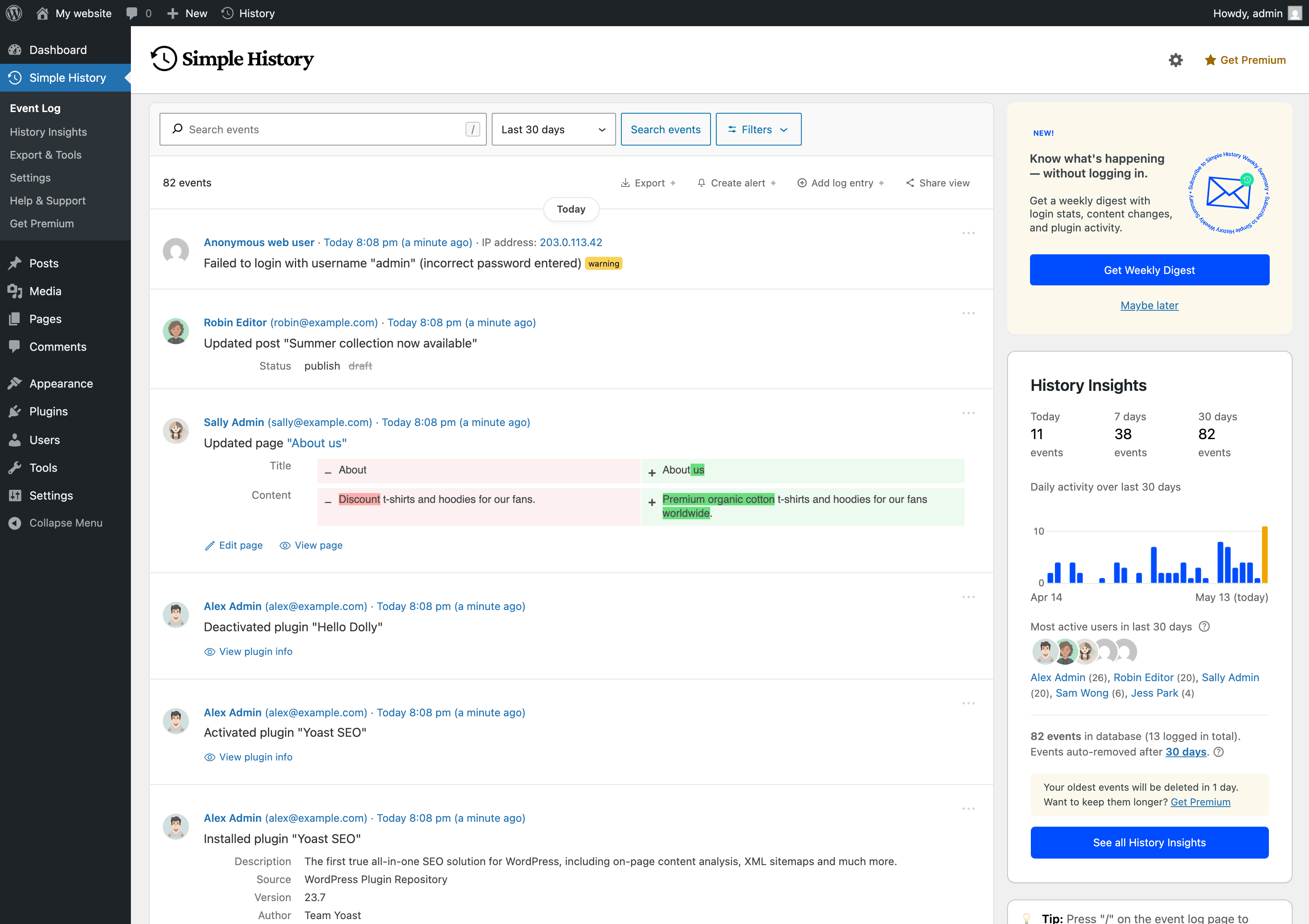
주요 이벤트 로그: 사이트에서 누가, 언제, 어디서 어떤 행동을 했는지를 명확하게 보여주는 타임라인과 함께, 일별 활동 내역 및 가장 활발한 사용자를 확인할 수 있는 사이드바가 제공됩니다.
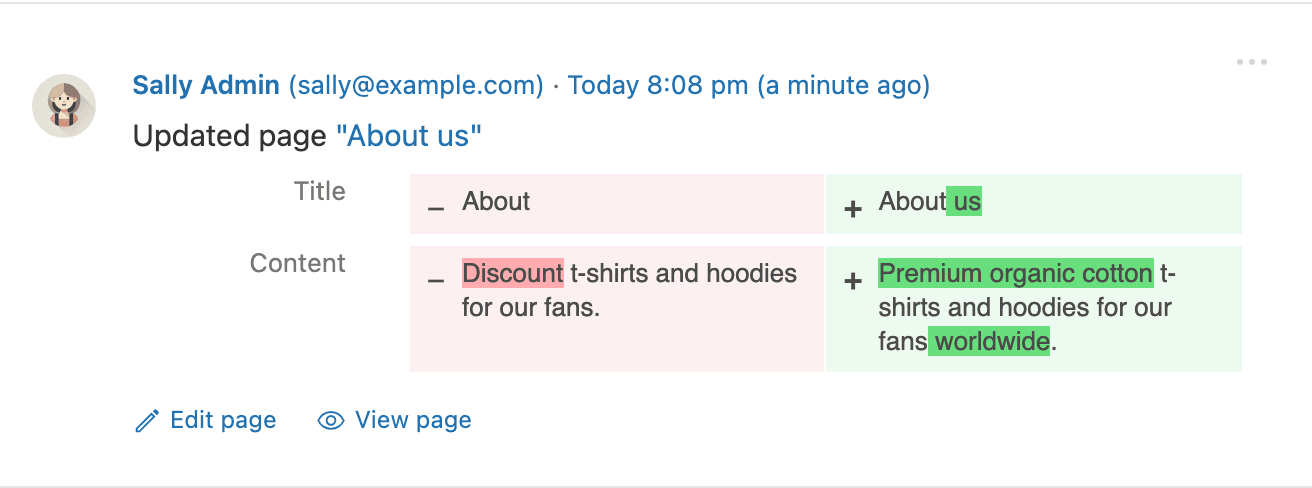
콘텐츠 변경 내역은 변경 전후의 전체 차이점을 보여주므로, 단순히 무언가 변경되었다는 사실뿐만 아니라 게시물이나 페이지에서 정확히 어떤 단어가 수정되었는지 확인할 수 있습니다.
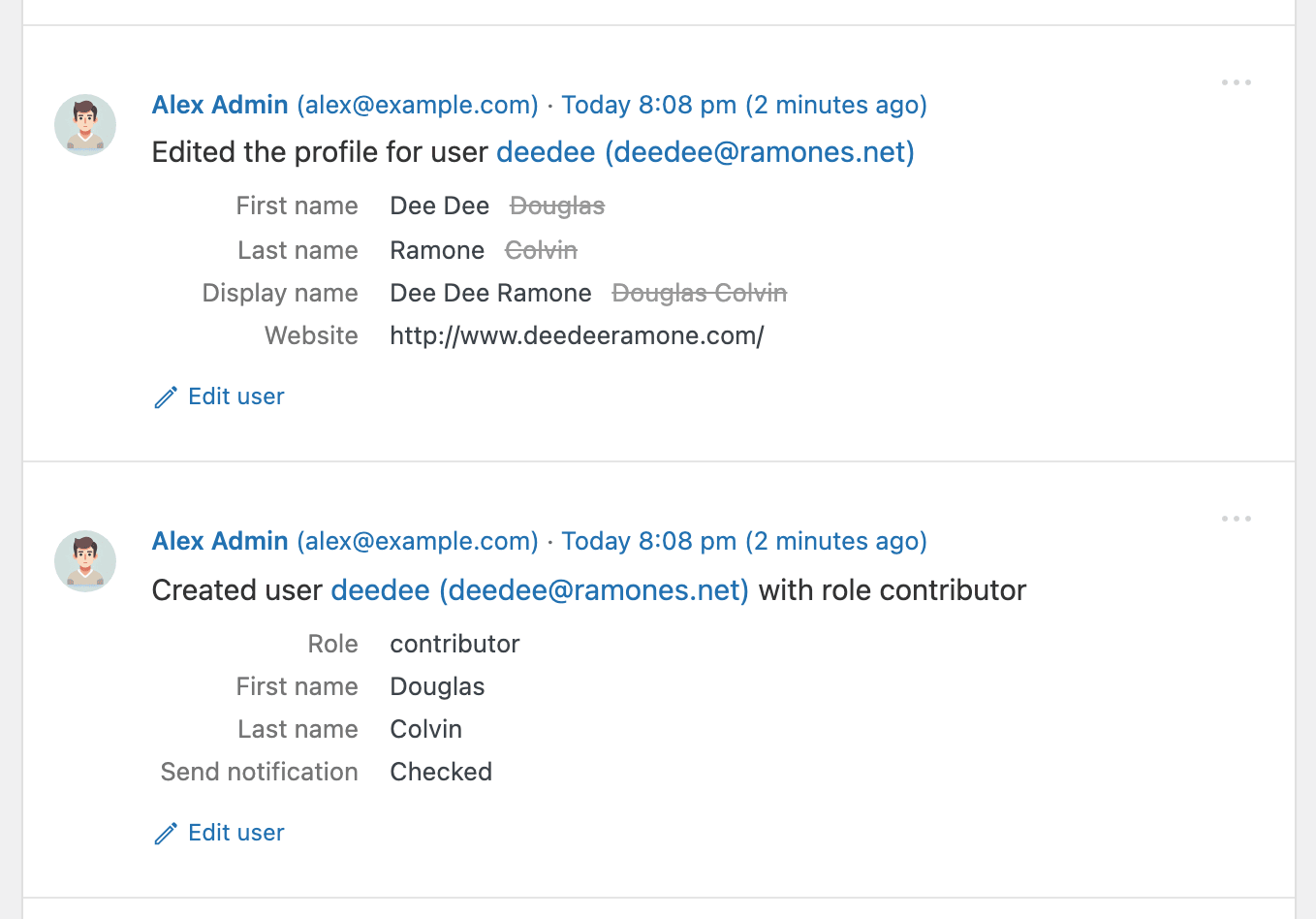
사용자 이벤트는 프로필의 모든 변경 사항(이름, 성, 표시 이름, 웹사이트, 역할 등)을 포착하며, 새로운 값 옆에는 이전 값도 함께 유지됩니다.
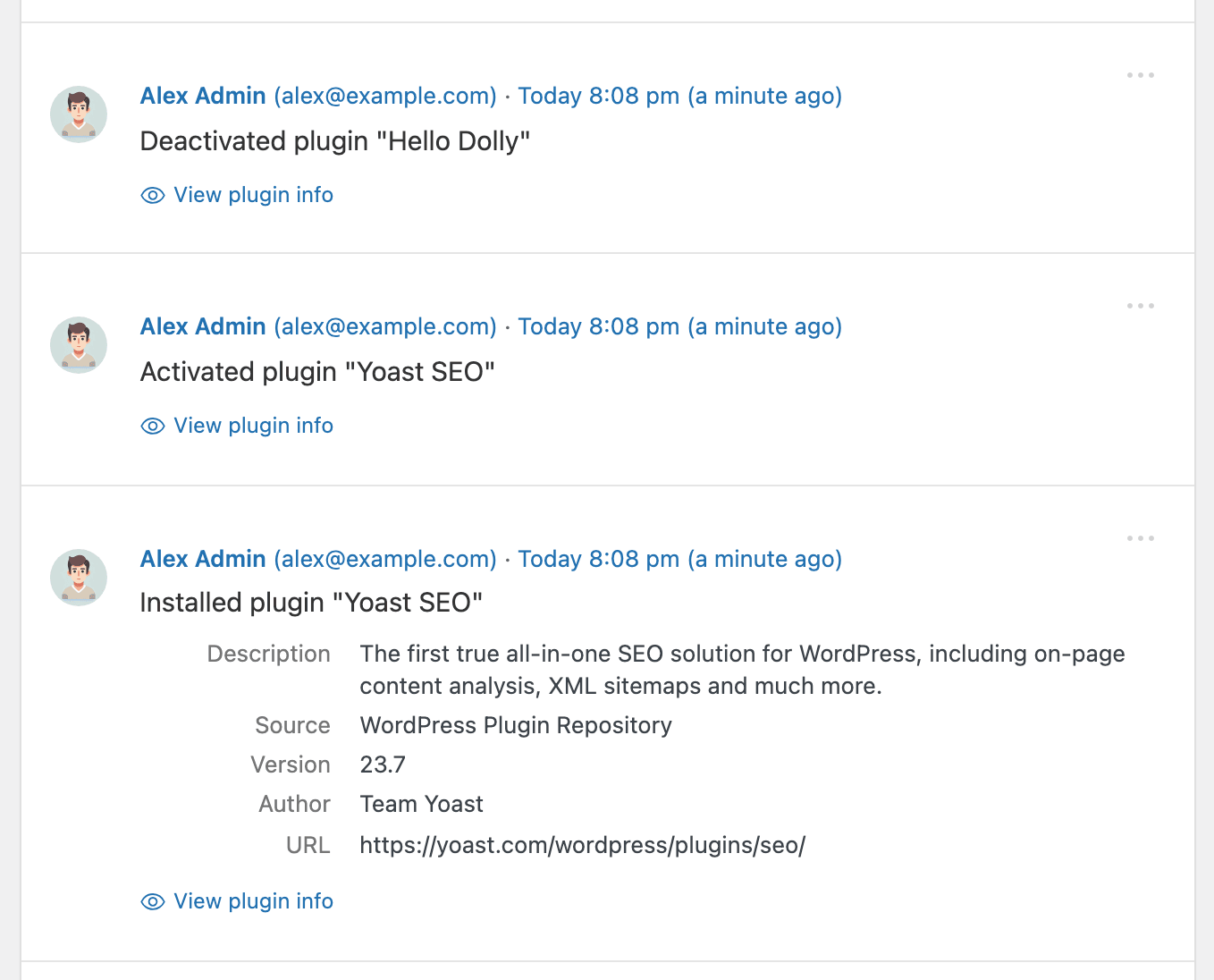
모든 플러그인의 설치, 활성화 및 비활성화 내역은 제작자, 버전, 출처 및 플러그인 링크와 함께 기록되므로, 사이트에서 어떤 플러그인이 실행 중인지 항상 확인할 수 있습니다.
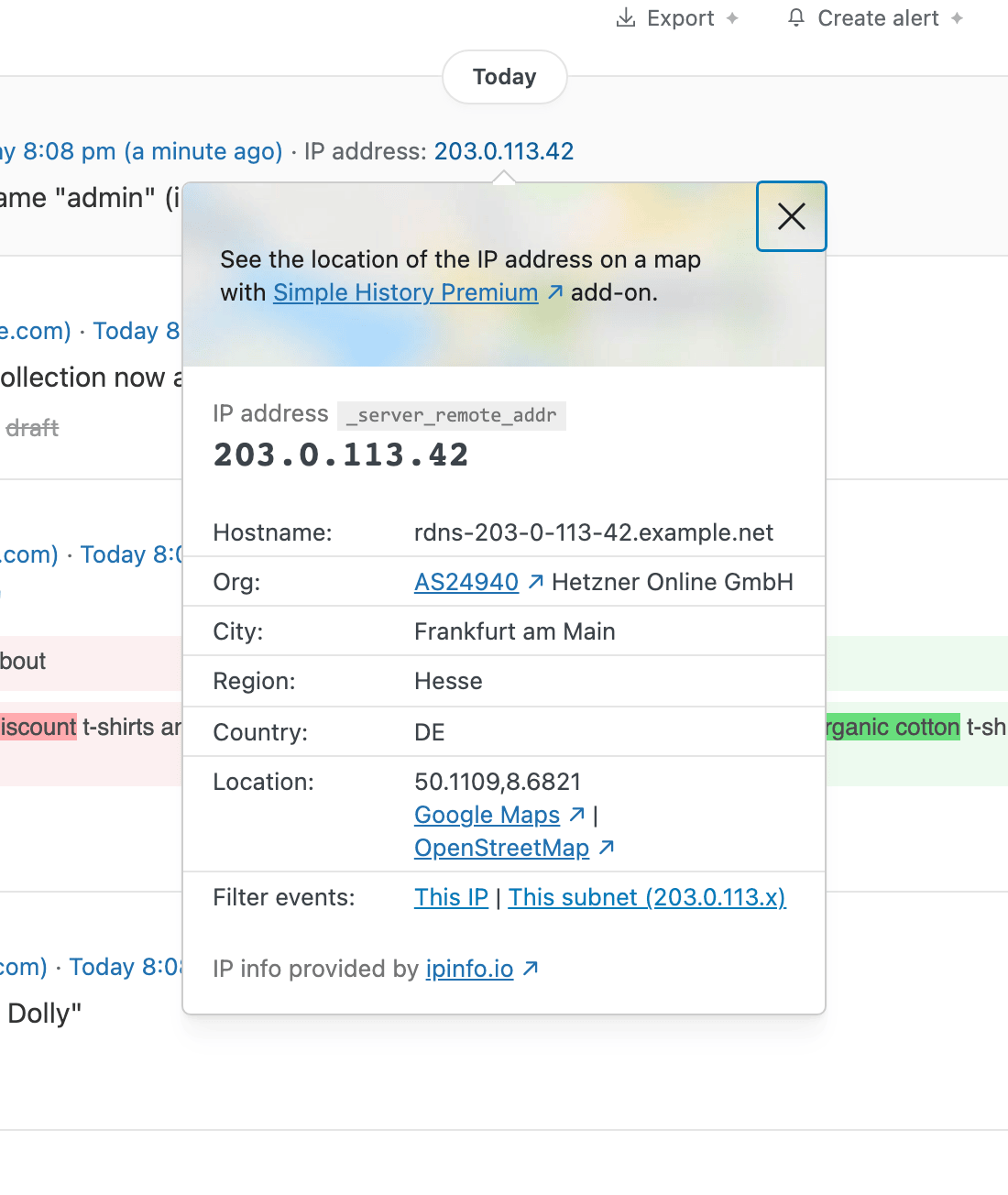
IP 주소를 클릭하면 해당 주소가 어디에서 왔는지(호스트명, 소속 기관, 도시, 국가) 확인할 수 있으며, 한 번의 클릭으로 해당 IP 또는 서브넷에서 발생한 모든 이벤트를 필터링할 수 있습니다. 로그인 실패 원인을 조사하는 데 이상적입니다.
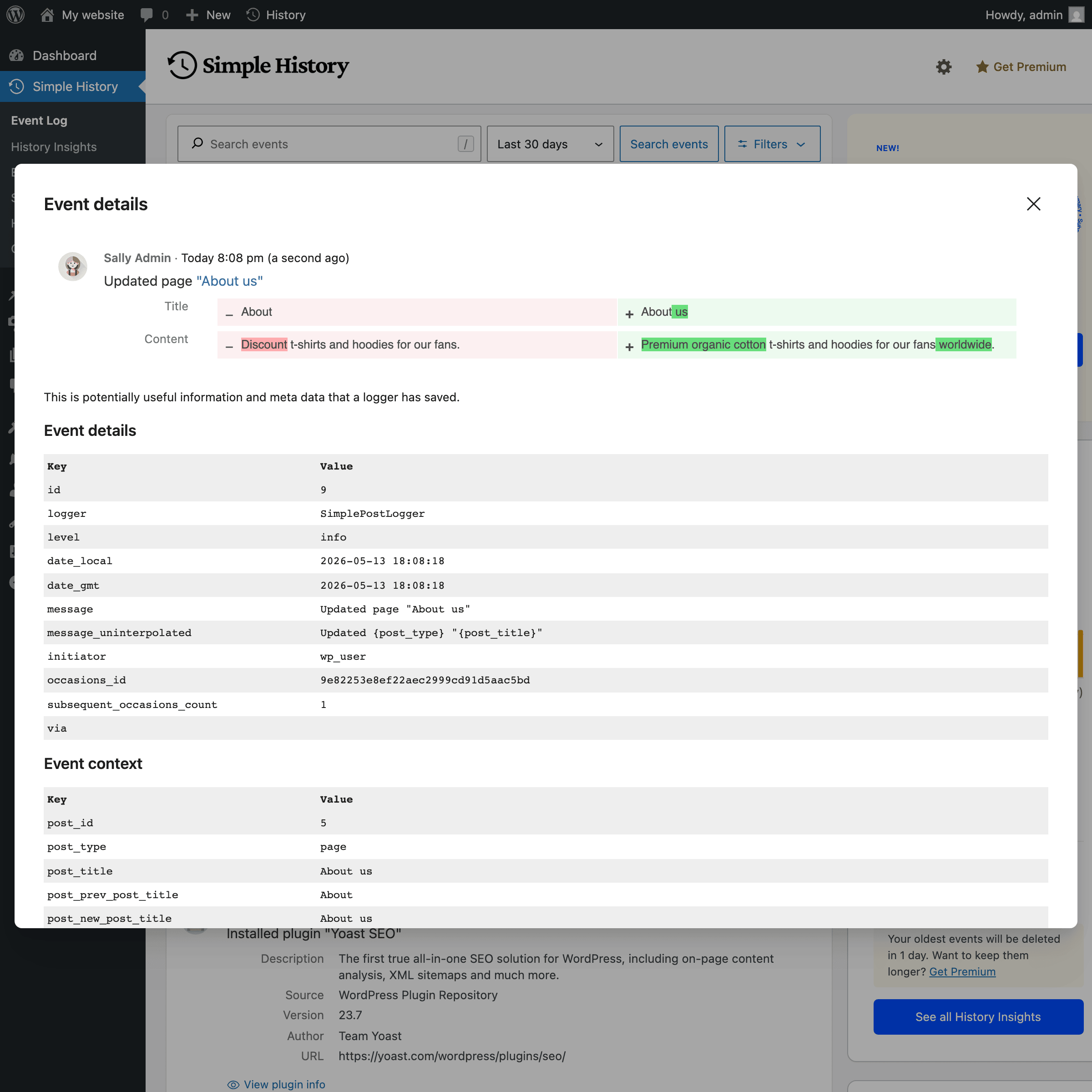
어떤 이벤트를 열어도 Simple History가 저장해 둔 전체 세부 정보를 확인할 수 있습니다. 여기에는 게시물 ID, 사용자 ID, 이전/이후 값 및 기타 모든 필드가 포함되어 있어, 각 항목에 대한 완전한 감사 추적이 제공됩니다.
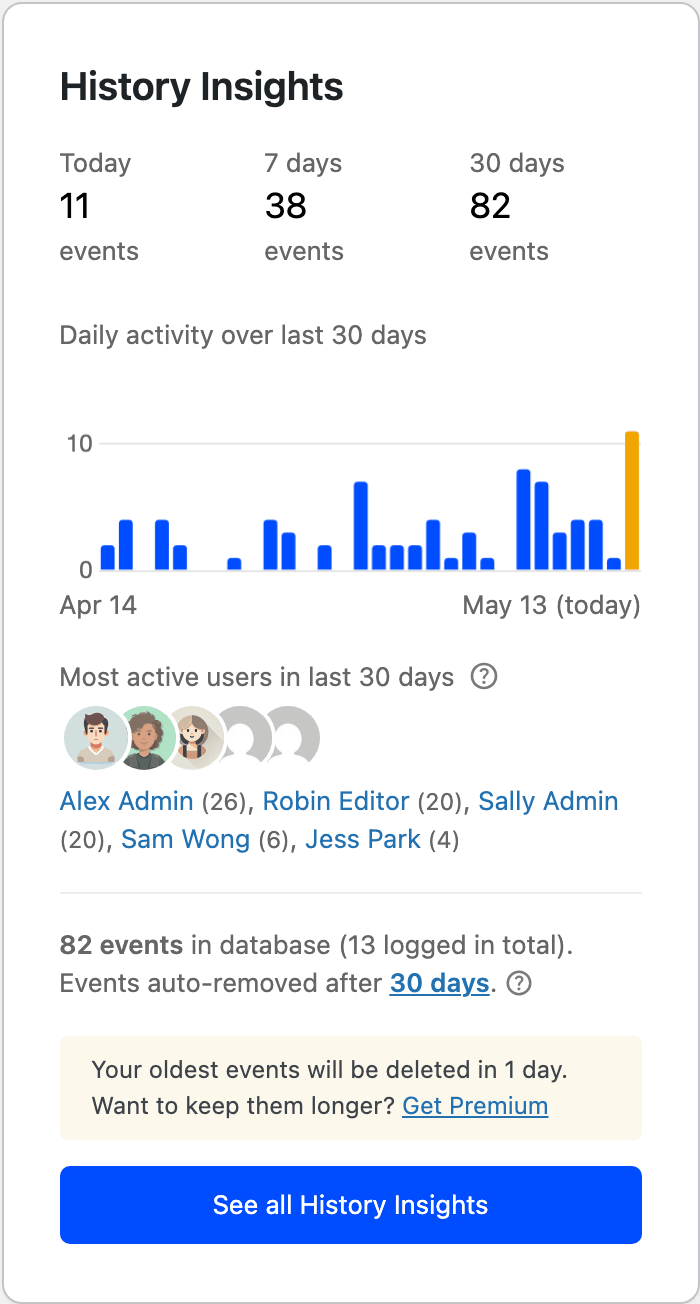
History Insights에서는 로그 바로 옆에 일별 활동 현황, 오늘, 이번 주, 이번 달의 이벤트 수, 그리고 가장 활발한 사용자 목록을 차트로 보여줍니다.
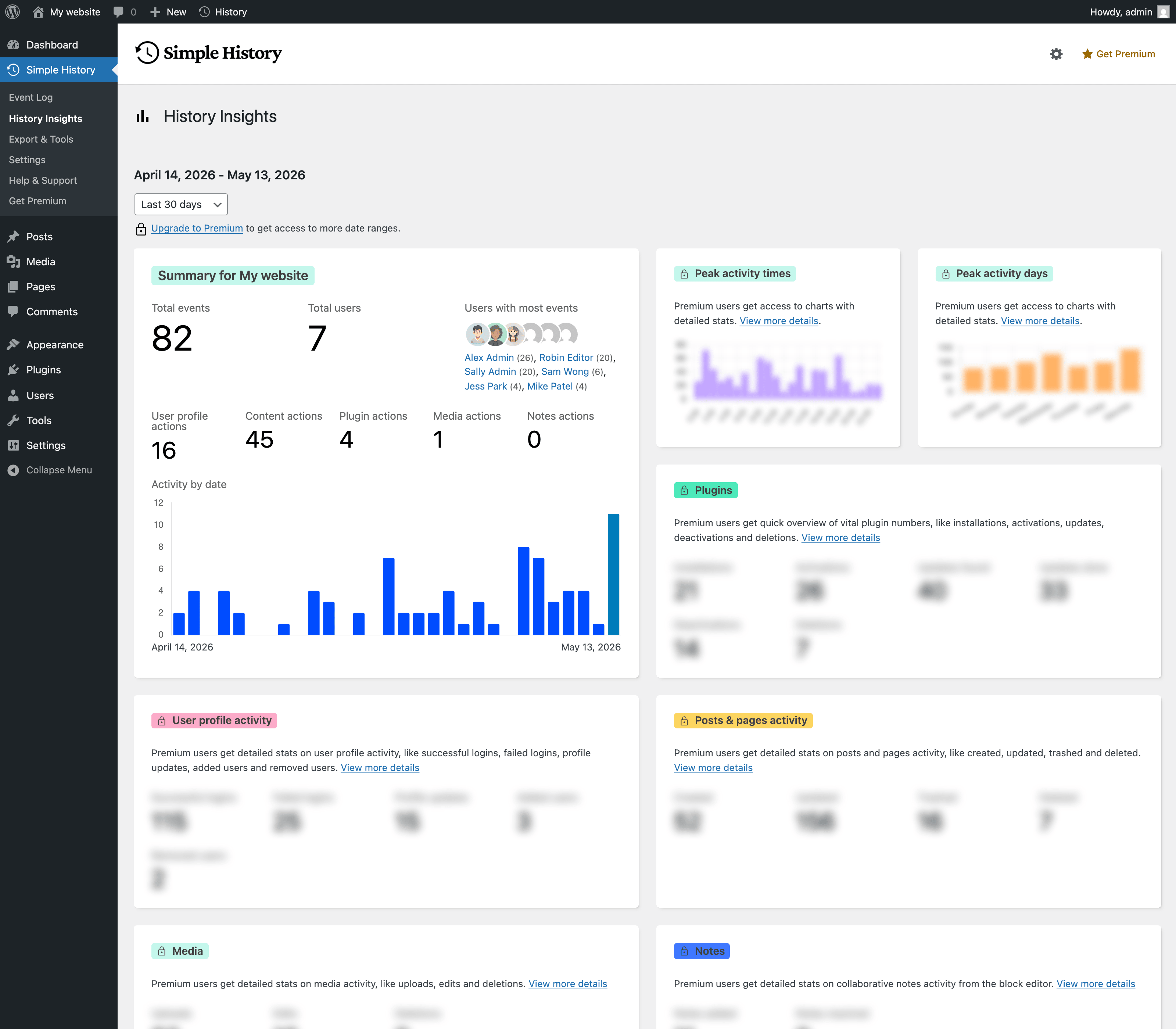
‘통계 및 요약’은 포괄적인 보고 대시보드입니다. 사용자, 게시물 및 페이지, 플러그인, 미디어 등에 대한 세부 내역을 원하는 기간에 따라 확인할 수 있습니다.
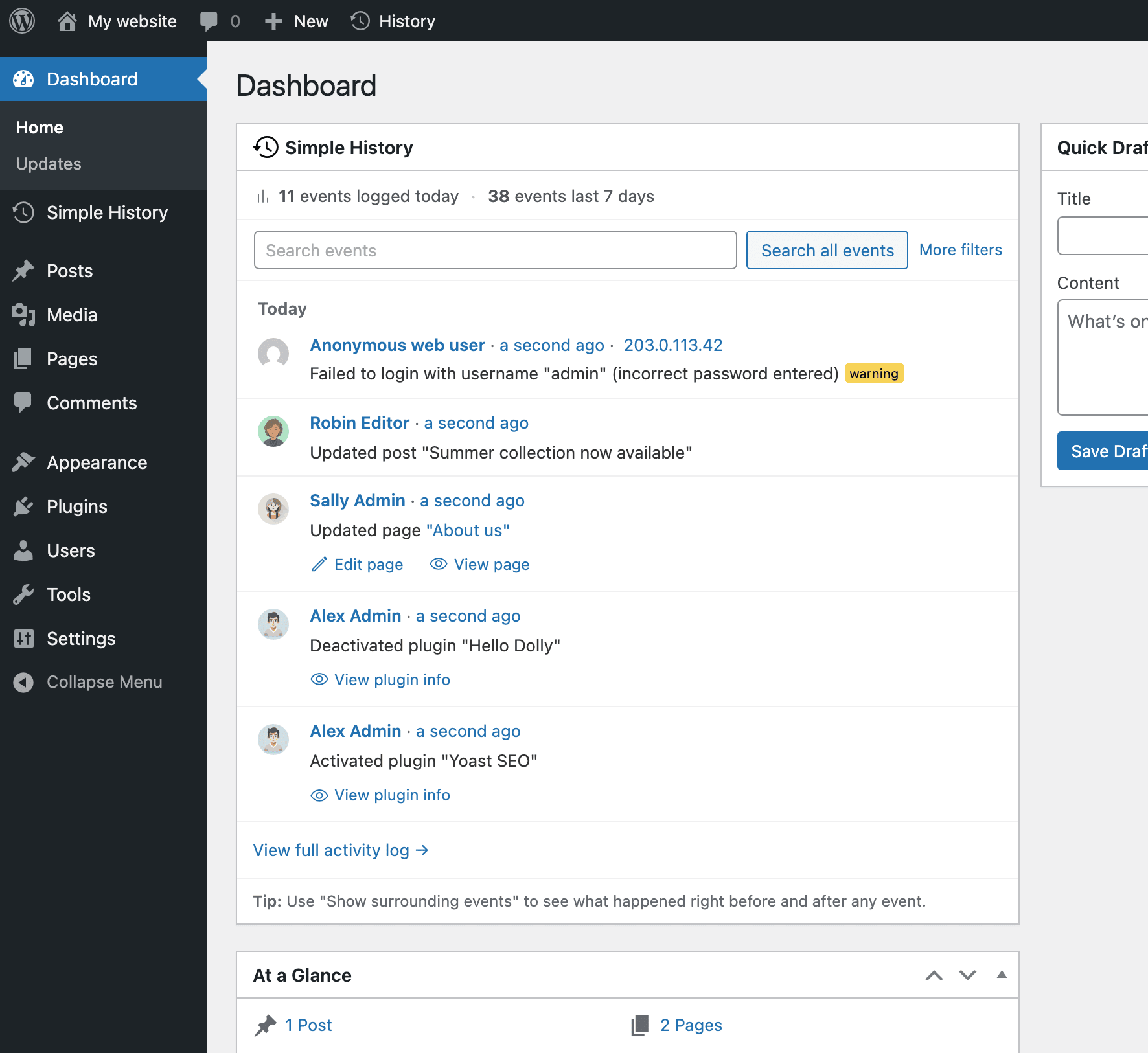
대시보드 위젯: 워드프레스 대시보드에서 바로 최근 활동 내역을 한눈에 확인할 수 있어, 매일 확인하는 페이지를 떠나지 않고도 사이트에서 어떤 일이 있었는지 파악할 수 있습니다.
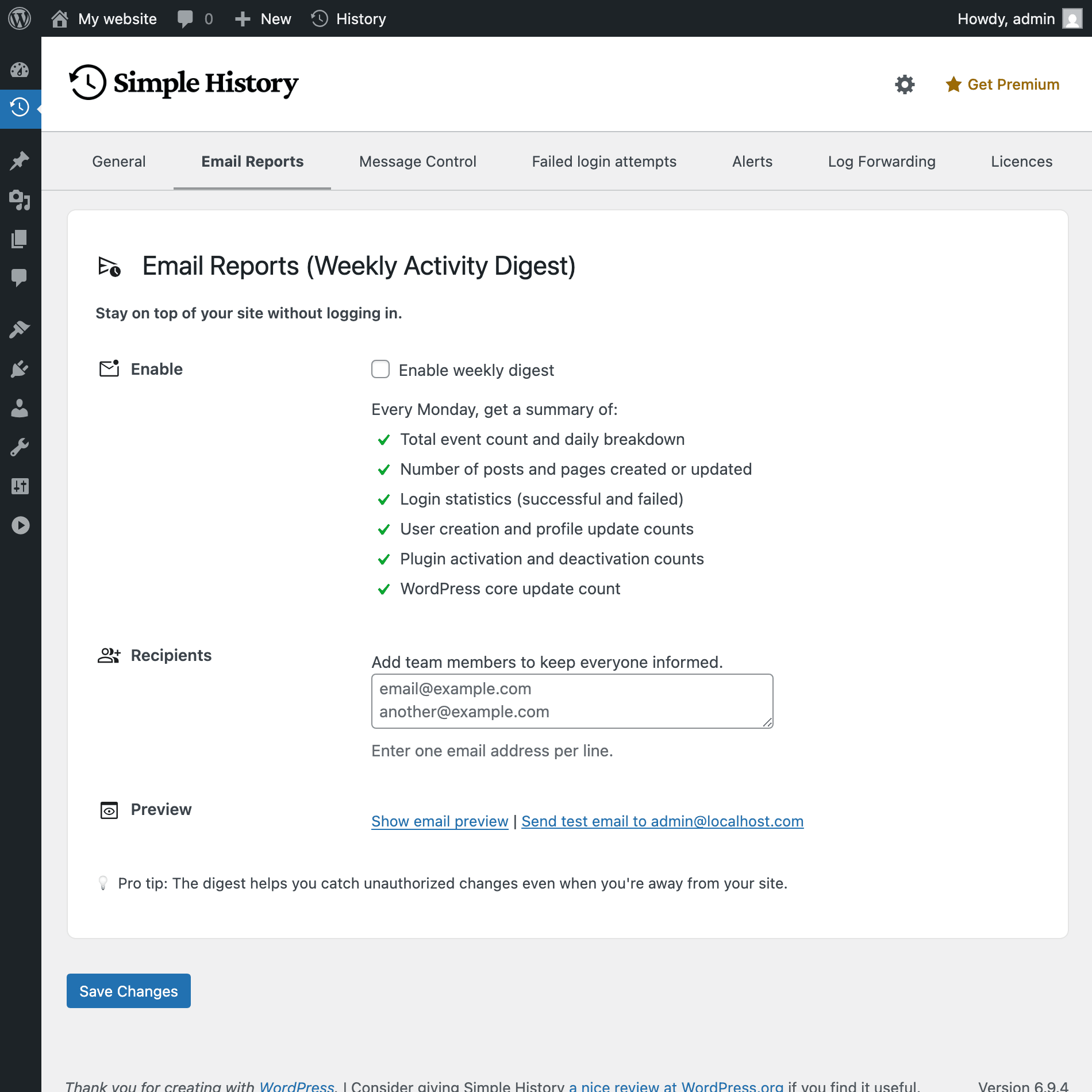
주간 이메일 보고서를 통해 로그인하지 않고도 최신 정보를 받아보실 수 있습니다. 설정 페이지에서 요약본 수신자를 선택하거나, 내용을 미리 보거나, 테스트 이메일을 보낼 수 있습니다.
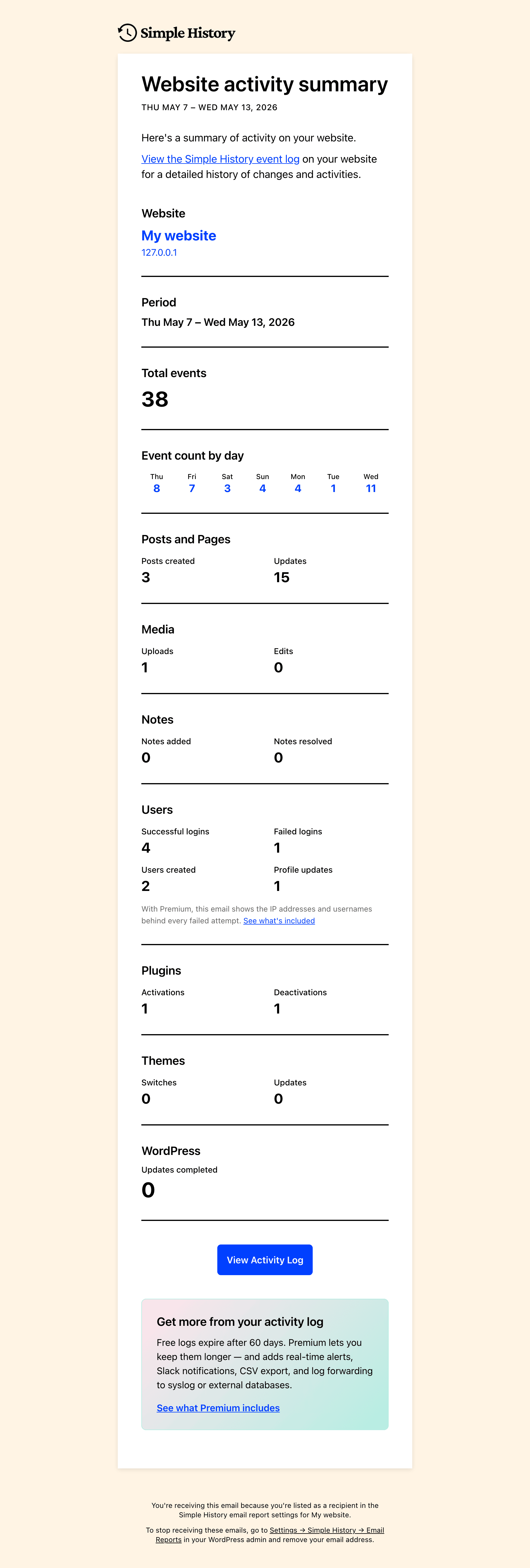
주간 요약본: 게시물, 사용자, 로그인 내역, 플러그인 변경 사항 등을 간결하게 정리한 내용을 여러분의 이메일 수신함으로 바로 받아보실 수 있습니다.
FAQ
플러그인은 무료인가요?
예! 심플 히스토리는 10년 넘게 무료로 제공되어 왔으며 앞으로도 계속 무료로 제공될 것입니다. 개발을 지원하고 추가 기능을 잠금 해제하려면 프리미엄 애드온을 구매하면 됩니다. 프리미엄 기능 보기.
로그를 보려면 어떻게 해야 하나요?
여러 가지 방법으로 로그에 액세스할 수 있습니다:
- 활동 통계 요약이 포함된 대시보드 위젯
- A dedicated log page in the WordPress admin area
- 관리자 바의 빠른 보기 드롭다운 메뉴에서
- 워드프레스 명령 팔레트 – “Simple History”를 입력하면 현재 게시물의 로그로 이동합니다.
Yes! You can customize the menu position in the plugin settings. Choose between showing Simple History at the top or bottom of the main menu, or inside the dashboard menu or tools menu.
플러그인을 사용하려면 코딩 기술이 필요한가요?
No! Just install and activate the plugin, and it will start collecting activity logs automatically.
로그는 어디에 저장되나요?
The log is stored in your WordPress database.
로그를 내보낼 수 있나요?
Yes, you can export logs in CSV or JSON format for further analysis.
다른 플러그인과 호환되나요?
Yes! Simple History supports many popular plugins out of the box. Additionally, developers can integrate it with any plugin using the Logging API.
Simple History가 WordPress AI 플러그인의 사용 내역을 기록하나요?
네. 공식 WordPress AI 플러그인이 활성화된 상태에서는, Simple History가 AI 기능이 켜지거나 꺼질 때, 기능의 AI 제공업체나 모델이 변경될 때, 그리고 ‘커넥터 승인’ 화면에서 플러그인이나 테마가 AI 제공업체에 대한 액세스 권한을 요청하거나, 승인받거나, 상실할 때 이를 기록합니다.
API 키와 AI 프롬프트 또는 응답 내용은 절대 기록되지 않으며, 해당 정보는 AI 플러그인의 자체 설정에만 저장됩니다.
이 플러그인으로 인해 웹사이트 속도가 느려지나요?
No, Simple History is lightweight and optimized for performance. Most logging occurs in the WordPress admin area when a WordPress user performs an action.
By default, nothing is logged on the front end, ensuring visitors experience no impact on performance.
누가 로그를 볼 수 있나요?
Access to the log depends on the user’s role:
- Administrators can view all logged events.
- Editors can see events related to posts and pages.
Can I exclude certain users from being logged?
Yes, you can exclude users based on role or email using the
simple_history/log/do_logfilter.For more details, check the hooks documentation.
How long is the history kept?
기본적으로 로그 기록은 30일 동안 보관됩니다. 버전 5.25.0 이전에 Simple History를 설치한 사이트의 경우 60일 동안 보관됩니다.
Upgrade to Simple History Premium to change this using a GUI.
특정 사용자의 변경 사항을 추적할 수 있나요?
Yes! You can filter logs by username, making it easy to track individual activity.
이 플러그인은 GDPR을 준수합니까?
GDPR compliance depends on how you use the plugin and how you handle collected data. WordPress guidelines prohibit plugins from making legal compliance claims, so you should review your site’s data policies to ensure compliance.
What Simple History does by default:
- ❌ Loads no Google Fonts
- ❌ Sets no cookies
- ❌ Keeps no data in the browser’s local storage
- ✅ Masks IP addresses: the last part is removed before storing (192.168.1.x; IPv6 addresses keep only the first half)
- ✅ Looks up an IP address at ipinfo.io only when an administrator clicks it
The log can contain personal data (called personal information in some laws), such as usernames, email addresses and masked IP addresses. A masked IP address can still be linked to a person through the rest of the log entry. Which privacy laws apply, and what they require, depends on your site, so mention the activity log in your privacy policy. Simple History adds suggested text for this under Settings Privacy Policy Guide.
For more information, see our support page GDPR and Privacy: How Your Data is Stored in Simple History.
후기


기여자 & 개발자
“심플 히스토리 – 워드프레스 변경 사항 추적, 기록 및 감사”(은)는 오픈 소스 소프트웨어입니다. 다음의 사람들이 이 플러그인에 기여하였습니다.
기여자

변경이력
심플 히스토리가 유용하다면 ✨
Experimental entries are gated behind the “Experimental features” checkbox under Simple History Settings. Tick it to try them, then share feedback so we know what to ship for everyone.
5.35.0 (October 2026)
This release is about logins and privacy. Logins with two-factor authentication are logged when the code is accepted, IP addresses in the log are only shown to administrators, and there is suggested text about the log for your privacy policy. The weekly email settings got simpler too.
Read more about it in the release post
추가
- Suggested privacy policy text for the activity log, under Settings Privacy Policy Guide.
- Support for the Two Factor plugin: logins are logged when the two-factor code is accepted, not when the password is entered, and show whether two-factor authentication was used.
- Logins on sites using Wordfence show whether two-factor authentication was used, and how: authenticator app, recovery code, passkey or remembered device.
- Experimental — Emails that WordPress fails to send are logged as errors, and a notice in the sidebar and email settings shows how many failed in the last 30 days.
- Experimental — WP-CLI events store the command, the server user and, for commands run over SSH, the masked IP address they came from. Nothing is shown in the log yet.
변경
- Weekly email settings have a “Site admin” checkbox that sends the email to the site’s admin address and follows it when it changes, and adding more recipients no longer stops the email to the admin.
- IP addresses in the log are shown only to administrators. Editors and other roles that can read the log no longer see them in events, event details, exports or search. The secret RSS feed still shows them.
- IP addresses are described as masked instead of anonymized, since a masked address can still be linked to a person through the rest of the log entry.
- XML export events say what was exported (all content or a post type) and show the author, category, date and status filters used, also for past exports.
- Experimental — Role logger: removing capabilities from a role is a notice instead of a warning, and granting a capability that controls the site (such as
manage_optionsorinstall_plugins), or creating a role with one, is now a warning.
수정
- The IP address of people who comment is now masked like every other IP address in the log, and only administrators can see it. Earlier comment events keep the full address but are hidden from other roles.
- Core files check no longer reports official WordPress files in the site’s language or in English as modified, such as a German
wp-config-sample.phpon a site installed in English. - Image changes in event details, such as a new featured image, line up with the text changes above them.
- Event details are easier to read on phones: each label sits above its value, and image thumbnails fit inside their column.
- Wrong two-factor codes from the Two Factor, Kadence Security (formerly Solid Security) and Wordfence plugins are logged as failed logins.
5.34.0 (September 2026)
Too many events in your log to get an overview? The new compact view may come in handy then. And Premium users get an even more compact view with the new table view, for digging into your events. There is also a new button that hides the sidebar, to give you full focus on the log with less distraction. Read more about this and more in the release post .
추가
- Table view for research and debugging sessions: sort, filter, compare two events side by side, and export (Premium).
- “Hide sidebar” button next to the view switcher, so the event log can use the full width of the page. Each view remembers its own choice: the table view starts without the sidebar, the detailed and compact views with it.
- Events can now be sorted by date, id, level, logger or event type through the REST API (
orderbyandorder) and on the command line (wp simple-history event list --orderby=id --order=asc). - Events can be counted instead of listed through the REST API (
/events/aggregate), grouped by date, level, logger or initiator. The same filters apply, so it counts exactly what the list would have shown. - Thumbnail on “Edited attachment” events, so you can see which image the event is about.
- Links on tips in the sidebar and dashboard widget, pointing to the documentation or feature page for what the tip describes.
변경
- The compact event log view is no longer experimental. The Detailed/Compact switch is now available to everyone from the event log page.
- Custom field changes on posts name the fields that changed instead of only counting them.
- Custom field and term changes on posts are included in event details from the REST API and WP-CLI.
- New installs get a notice a few days before their oldest events are cleared out for the first time. It explains why, mentions that you can export your log, and stays until you close it.
수정
- Sorting the event log oldest first now works.
order=ascwas accepted and then ignored on the default event listing, which returned newest first anyway. - The “new events” count above the log now respects your filters. With “Hide my own events” on, or event types hidden, it counted events the list would never show — so it could announce new activity and then show you nothing when you clicked it.
- Changed post excerpts are labelled “Excerpt” instead of the raw field name.
- Custom field changes made in the block editor’s meta boxes, like the Custom Fields panel, are now logged.
- Empty custom fields that some plugins create when a post is first saved are no longer listed as added.
- Internal keys from Advanced Custom Fields no longer clutter the list of changed custom fields.
- Tips that mention Premium are hidden on sites that have turned promotional messages off.
- Image thumbnails on media events name the image for screen reader users.
- Weekly email with no recipients set was never sent. It now goes to the site admin email until you add recipients, and the settings page tells you so.
- Test email is sent to the weekly email’s recipients instead of to you, and the button says who that is.
- Experimental — Role and capability changes a plugin makes on its own, such as after an update, are credited to WordPress instead of whoever was logged in, and name the plugin that made them.
보안
- Database errors from the event log no longer include the database’s own error message in the API response. Reading the log needs a lower capability than most things in WordPress, and a MySQL error names tables and columns.
5.33.0 (2026년 9월)
주간 이메일 디자인이 새롭게 바뀌었습니다. 이메일은 이번 주의 요약으로 시작되며, 각 숫자를 클릭하면 해당 이벤트로 연결됩니다. 워드프레스 및 방문자 관련 이벤트는 더 이상 로그인한 관리자에게 귀속되지 않으며, Redirection 5.10에서 Redirection 로깅 기능이 다시 정상 작동합니다. 또한 여기저기서 몇 가지 사소한 수정 사항이 적용되었습니다.
자세한 내용은 릴리스 게시물에서 확인하세요
추가
- 이제 환영 안내문, 환영 로그 항목, 로그 사이드바에서 한 번의 클릭만으로 주간 이메일 알림을 활성화할 수 있습니다(네, 저희는 주간 이메일 알림을 정말 좋아하고, 여러분도 분명 마음에 들어하실 거라고 생각합니다!).
- 실험 기능: 이벤트 로그를 화면에 더 많이 표시할 수 있는 압축 보기.
변경
- 주간 이메일 디자인이 업데이트되었습니다:
- 더 넓은 레이아웃, 섹션 아이콘, 해당 이벤트로 연결되는 클릭 가능한 번호, 더 간결한 설명문, 그리고 내용이 없는 섹션에는 “보고할 내용 없음”이라는 한 줄만 표시됩니다.
- 이제 일반 텍스트 버전이 포함되어 있어 스팸으로 분류될 가능성이 줄었습니다.
- 이번 주는 이벤트 수, 지난주 대비 변동 사항, 로그인 실패 횟수, 가장 활발한 사용자 등 이번 주를 간략히 요약하는 내용으로 시작합니다.
- …그리고 팁을 전하며 마무리합니다.
- 워드프레스, WP-CLI, 익명 사용자 및 “기타” 카드는 모든 사용자에게 해당 이벤트로 연결됩니다.
- 동일한 ‘간단한 기록’ 설정에 대한 반복적인 수정 내역은 하나의 행으로 묶입니다.
- “비슷한 이벤트” 링크는 이제 키보드 포커스를 유지하는 확장/축소 컨트롤로 변경되었습니다.
- 이벤트 세부 정보는 이벤트 텍스트와 정렬되며, 긴 레이블은 값이 화면 밖으로 밀려나지 않도록 줄바꿈됩니다.
수정
- Redirection 5.10.0 및 이후 버전부터 리디렉션 플러그인 이벤트가 다시 기록됩니다.
- 워드프레스 또는 방문자에 의해 발생하는 이벤트(업데이트 확인, 로그인 실패, 예약된 작업 등)는 더 이상 로그인한 관리자에게 귀속되지 않습니다.
- 이벤트 로그의 첫 페이지 로딩 속도가 빨라졌습니다(디바운스 효과 수정).
- 로그가 로드되는 동안 자리 표시자와 날짜 드롭다운 메뉴가 더 이상 이동하지 않습니다.
- 이벤트를 불러올 수 없을 때 관리자 바의 빠른 보기 화면에 메시지가 표시됩니다.
보안
- 리디렉션 관리 권한이 없는 사용자는 더 이상 로그에 리디렉션 이벤트를 추가할 수 없습니다.
5.32.0 (2026년 9월)
확장 가능한 디프(diffs), 변경 사항이 생성된 정확한 리비전을 여는 “리비전 보기” 링크, 그리고 로그를 가득 채우던 애플리케이션 비밀번호 로그인 실패 문제를 해결했습니다.
릴리스 게시물에서 자세한 내용을 확인하세요
추가
- 긴 차이점 목록은 “차이점 펼치기” 버튼을 사용하여 그 자리에서 펼칠 수 있습니다.
- 참고: 메모에는 해당 메모가 속한 페이지나 게시물과 동일한 작업 링크가 포함됩니다.
- 실험 기능 — 이벤트의 작업 메뉴에서 “이 유형의 이벤트 숨기기”를 선택하면 해당 이벤트 유형이 현재 목록에서 제거됩니다. 숨겨진 유형은 목록 상단에 제거 가능한 칩 형태로 표시되며, 로그에 기록되는 내용에는 어떠한 영향도 미치지 않습니다.
변경
- 게시물 및 페이지 이벤트에는 변경 사항이 생성한 개정판으로 연결되는 “개정판 보기”라는 링크가 있습니다. WordPress 7.1 이상에서는 이 링크를 클릭하면 편집기의 시각적 개정판 보기가 열립니다.
- 사이트 아이콘 변경 시, 첨부 파일 ID 대신 기존 아이콘과 새 아이콘이 나란히 표시됩니다.
- 이벤트 하단의 액션 링크는 마우스를 올려놓거나 포커스가 맞춰질 때까지 회색으로 표시되며, 대시보드 위젯에서는 점 하나로 구분됩니다.
- 라이선스 키의 활성화 횟수 제한에 도달한 경우, 설정 페이지에서 그 이유와 Lemon Squeezy의 ‘내 주문’ 페이지에서 해당 키를 다시 사용할 수 있게 하는 방법을 안내합니다.
- 실험적 기능 — WordPress Abilities API를 통해 AI 도구로 전송되는 이벤트 필드에는 출력 스키마 규칙을 따릅니다.
수정
- 상대 시간(“2분 전”)은 해당 사이트의 UTC 오프셋에 따라 실제 시간과 차이가 있을 수 있습니다.
- “이벤트 메시지 복사”와 “마크다운으로 복사” 기능은 로그에 표시된 시간이 아닌 사이트의 시간을 복사했습니다.
- 콘텐츠 차이 표시에는 워드프레스 코어의 수정 내역 화면과 동일한 녹색과 빨간색이 사용됩니다. 일부 이벤트에서는 다른 색상 조합이 사용되었습니다.
- 변경 사항이 없을 때는 더 이상 “프로필 수정” 이벤트가 표시되지 않습니다. 블록 편집기는 편집기 기본 설정을 사용자 기록에 저장하며, 저장할 때마다 프로필 수정으로 기록되었습니다.
- 블록 내의 메모(워드프레스 7.1)에는 더 이상
<br>태그가 그대로 표시되지 않으며, @멘션으로 시작하는 메모의 경우 더 이상 해당 태그가 다음 단어에 붙어 표시되지 않습니다. - 사이트의 이모티콘 이미지 호스팅 서버에 접속할 수 없는 경우에도 반응 이모티콘이 더 이상 깨진 이미지로 표시되지 않습니다.
- 응용 프로그램 비밀번호 로그인 실패는 다른 로그인 실패와 마찬가지로 속도 제한, 그룹화, 필터링 및 집계됩니다. 이전에는 REST API에 대한 무차별 대입 공격으로 인해 로그가 과부하될 수 있었습니다.
- 게시물의 대표 이미지가 변경될 때 더 이상 원시 “thumb_id” 및 “thumb_title” 행이 표시되지 않고, 빈 부분에는 “없음”이 표시되며, 작은 썸네일이 로드되고, 구조화된 이벤트 세부 정보에 포함됩니다.
- 설치된 테마나 플러그인 위에 ZIP 파일을 업로드하면, 이는 새 설치가 아닌 업데이트, 다운그레이드 또는 재설치로 기록됩니다.
보안
- 기타 보안 강화 조치.
5.31.0 (2026년 8월)
🎨 이제 사이트 편집기의 변경 사항(템플릿, 템플릿 파트, 사이트 전체 스타일, 패턴, 탐색 메뉴 및 글꼴)이 기록됩니다. 또한 이번 릴리스에서는 공식 WordPress AI 플러그인에 대한 지원이 추가되어, 어떤 플러그인과 테마가 어떤 AI 제공업체에 대한 액세스 권한을 부여받았는지 확인할 수 있으며, 보안 강화 조치와 일반적인 수정 사항도 포함되어 있습니다.
릴리스 게시물에서 모든 변경 사항에 대해 자세히 알아보세요.
추가
- 이제 사이트 편집기 변경 사항이 기록됩니다. 여기에는 템플릿, 템플릿 파트, 사이트 전체 스타일, 패턴, 탐색 메뉴, 글꼴 등이 포함되며, 블록 편집기 외부에서 이루어진 변경 사항도 포함됩니다. 템플릿을 테마 기본값으로 재설정하는 경우, 이는 삭제가 아닌 재설정으로 기록됩니다.
- 공식 WordPress AI 플러그인인 ‘Simple History’는 이제 AI 기능이 활성화되거나 비활성화될 때, 기능의 AI 제공업체나 모델이 변경될 때, 그리고 ‘커넥터 승인’ 화면에서 플러그인이나 테마가 AI 제공업체에 대한 액세스 권한을 요청하거나 승인받거나 상실할 때 이를 로그에 기록합니다. API 키와 AI 프롬프트 내용은 로그에 절대 저장되지 않습니다.
--format=json및--format=yaml을wp simple-history info에 추가하여, 배포 또는 CI 스크립트가 Premium이 활성화되어 있고 라이선스가 부여되었는지 확인할 수 있도록 합니다.- 실험 기능 — 이제 WordPress Abilities API(WordPress 6.9 이상)를 통해 AI 도구 및 자동화 기능에서 활동 로그를 이용할 수 있습니다. 읽기 전용 — 노출된 어떤 항목도 로그 항목을 변경하거나 삭제할 수 없습니다.
변경
- WordPress 7.1에서 테스트되었습니다.
- 테마 업데이트 이벤트에서는 이제 플러그인 업데이트 이벤트와 마찬가지로, 테마가 변경된 이전 버전과 새로운 버전의 이름을 표시합니다.
- 실험적 기능 — 역할 이벤트의 세부 정보 패널에 10개 이상의 기능이 있을 경우, 더 이상 모든 기능을 나열하지 않습니다. 개수는 이벤트 메시지에 그대로 표시되며, 전체 목록은 이벤트 컨텍스트에서 확인할 수 있습니다.
수정
- “사용자 삭제” 이벤트에서는 삭제된 사용자의 세부 정보 대신 ID, 이메일 및 로그인 정보가 비어 있는 것으로 표시되었습니다.
- 개인 정보 수출 요청은 새로 접수된 경우뿐만 아니라 상태에 관계없이 모두 기록되었습니다.
wp simple-history info는 Premium이 활성화된 사이트에서는 라이선스 문구를 표시한 적이 없습니다.- 이제 로그 헤더, 통계 표시줄, 페이지 매김 및 그룹화된 이벤트 수에서 이벤트 수가 사용자의 지역 설정에 맞춰 그룹화되어 표시됩니다. 즉, “187 304 events”로 표시되며, “187304 events”로 표시되지는 않습니다.
- 백필 알림에 따르면, 천 단위를 공백으로 구분하는 로케일에서 항목 수 계산에
이 잘못 포함된 것으로 나타났습니다. - “오늘”과 “어제” 날짜 구분자, 그리고 각 일정에 표시된 “오늘” 라벨이 사용자의 자정이 아닌 UTC 자정에 변경되므로, 최근 일정의 날짜가 잘못 표시될 수 있습니다.
- 설치 후 표시되던 환영 안내문이 해당 안내문이 연결된 기록 페이지에 더 이상 나타나지 않아, “한 번 살펴보세요” 링크가 항상 다른 곳으로 연결됩니다.
- 이제 로그에는 “알 수 없는 오류” 대신 로드에 실패한 실제 원인이 표시됩니다. 대부분의 사이트에서는 오류 세부 정보가 화면에 표시되기 전에 모두 삭제되고 있었습니다.
- 이제 로그를 불러오는 과정에서 발생하는 데이터베이스 오류에는 문제의 원인이 명시되므로, 직접 조치를 취하거나 호스팅 업체에 전달할 수 있습니다.
보안
- 댓글 내용은 이벤트 상세 정보 패널로 전달되기 전에 이스케이프 처리되므로, 댓글을 통해 로그에 마크업을 삽입할 수 없게 되었습니다.
- 댓글을 남길 수 있는 사용자라면 누구나 유발할 수 있는
]]>문자열이 게시된 콘텐츠에 포함되어 있어도 RSS 피드가 더 이상 오류가 발생하지 않습니다. - 테마 커스터마이저의 색상 값은 견본으로 표시되기 전에 유효성 검증을 거치므로, 색상 설정이 느슨한 테마라도 로그에 CSS를 삽입할 수는 없습니다.
- CSV 내보내기에서는 앞서 설명한
=,+,-및@와 더불어 탭 및 캐리지 리턴도 수식 트리거로 처리합니다. - 옵션, 테마 및 미디어 로거 전반에 걸쳐 추가적인 이스케이프 처리 및 입력 유효성 검사를 실시했습니다.
- 이제 모든 이벤트와 함께 저장되는 참조 URL의 쿼리 문자열 값 중 비밀 정보로 보이는 부분은, ‘탐정 모드’가 저장하는 URL을 이미 가려두었던 방식과 마찬가지로 가려집니다.
- 마스킹 대상에 세션, 베어러, 자격 증명 및 개인 키 필드 이름도 포함됩니다.
5.30.0 (2026년 8월)
👍 이번 릴리스에서는 두 가지 실험적 기능이 정식 기능으로 전환되었습니다. 바로 이벤트 반응과, 현재 설정 상태(기록 보관 기간, 이메일 보고서 및 알림 활성화 여부, 로그 전달 위치 등)를 한눈에 확인할 수 있는 헤더 상태 표시줄입니다. 또한 이번 릴리스에는 보안 강화 조치와 몇 가지 기타 수정 사항이 포함되어 있습니다.
릴리스 게시물에서 모든 변경 사항에 대해 자세히 알아보세요
추가
- 플러그인 업데이트 가능 이벤트에 표시되는 “플러그인 정보” 작업 링크를 통해, 로그 화면을 벗어나지 않고도 익숙하지 않은 플러그인이 무엇인지 빠르게 확인할 수 있습니다.
- 이벤트 작업 메뉴에서 기존 사용자 및 이벤트 유형 필터와 함께 “동일한 IP 주소의 이벤트 찾기” 기능을 확인할 수 있습니다.
- 이제 더 많은 ‘Simple History’ 설정 변경 사항이 로그에 기록됩니다: 이메일 보고서, 실험적 기능 토글, 애드온 라이선스 키(키 값은 로그에 절대 저장되지 않습니다). (그리고 맞아요 – 다른 플러그인의 변경 사항을 기록하는 플러그인이 정작 자신의 설정 변경 사항은 기록하지 않았다는 점이 좀 웃기긴 했죠!)
- WP-CLI:
--metadata_search및--ai_only옵션은wp simple-history list명령어에서 사용되며, GUI의 메타데이터 검색 및 AI 필터 기능과 동일하게 작동합니다. - WP-CLI:
wp simple-history list에 AI 출처 열(ai_agent,ai_detected_via,ai_application)이 표시되어, 어떤 AI 도구가 변경을 수행했는지 및 어떻게 감지되었는지 확인할 수 있습니다. - 스텔스 모드가 다른 관리자를 포함한 다른 사용자에게 ‘Simple History’를 숨기고 있는 동안, 헤더에는 이제 “스텔스 모드: 켜짐”이 표시됩니다.
변경
- 리액션 기능이 실험 단계에서 벗어나 이제 기본적으로 활성화되어 있습니다. 이벤트에 👍로 반응해 보세요(설정 일반에서 비활성화 가능). 프리미엄 버전에서는 ❤️, 🎉, 🚀 등 더 많은 리액션 유형을 사용할 수 있습니다.
- 헤더 설정/정보 표시줄이 실험 단계에서 벗어나 이제 모든 관리자에게 표시됩니다. 이 표시줄을 통해 기록 보관 기간, 이메일 보고서 및 알림 활성화 여부, 로그 전달 위치 등을 한눈에 확인할 수 있으며, 각 항목은 해당 설정 페이지로 바로 연결됩니다.
- 이제 “수정된 설정” 로그 세부 정보에서 체크박스 설정이 (1/0 대신) “켜기/끄기”로 표시됩니다.
- 이제 모든 저장 방식(설정 API, 직접 옵션 업데이트, REST)에서 설정 변경 사항이 감지되며, 이를 단일 이벤트로 기록합니다.
- 대용량 또는 구조화된 설정은 이제 전체 값을 저장하지 않고 “변경됨”으로 기록되어, 로그의 가독성을 유지합니다.
- 개발자:
simple_history/user_can_clear_log는 이제 항상 허용되던 방식에서 벗어나, 사용자가 설정을 관리할 수 있는지 여부에 따라 기본값이 결정됩니다. 관리자의 경우 “로그 지우기” 버튼에는 영향을 미치지 않습니다. - 활동 로그가 많은 사이트에서는 로그를 HTML로 내보내는 것이 더 빠릅니다.
사용되지 않음
- WP-CLI:
wp simple-history event search— 대신wp simple-history event list --search=<term>를 사용하세요. 기존 명령어는 여전히 작동하지만, 향후 버전에서 제거될 예정입니다.
수정
- WP-CLI:
wp simple-history event search명령어를 실행하면 항상 결과가 0개로 반환되었습니다. - WP-CLI:
--fields명령을wp simple-history list에서 실행했을 때, 쉼표 뒤에 공백이 포함된 열 이름은 무시되었습니다. - REST API나 WP-CLI와 같이 리퍼러가 없는 요청에 의해 설정이 변경될 때 발생하는 PHP 8 치명적 오류. #649
- 통계 보기 및 주간 이메일 보고서에서 번역할 수 없는 문자열. #672
- 이제 유효하지 않은 날짜 또는 월 필터 값이 입력될 경우, 서버 오류 대신 명확한 오류 메시지(REST API에서는 HTTP 400, WP-CLI에서는 이해하기 쉬운 메시지)가 반환됩니다.
- RSS 피드의 주소에 읽을 수 없는 날짜 필터가 포함되어 있어도(예: 피드 리더에 저장된 오래된 피드 URL) 더 이상 오류가 발생하지 않습니다. 이제 오류 메시지 대신 빈 피드가 반환됩니다.
- 모든 관리자 페이지 로드 시 수행되던 불필요한 데이터베이스 쿼리를 제거했습니다(일회성 기록 보충 점검 과정에서 남았던 잔여 코드였습니다).
- 이제 대시보드 위젯은 로그를 불러올 수 없는 경우(예: REST API가 차단된 경우)에, 끝없이 자리 표시자를 불러오는 대신 세부 정보가 포함된 오류 메시지를 표시합니다.
- 워드프레스 6.3에서 수정본이 생성되는 게시물을 저장할 때 치명적인 오류가 발생합니다.
- 이제 ‘게시물 업데이트’ 이벤트는 해당 이벤트로 생성된 개정판으로 연결됩니다. (이 기능은 5.16.0 버전에서 추가된 이후로 링크가 누락되어 있었습니다!)
- 게시물이 삭제된 댓글을 기록할 때 PHP 경고가 발생합니다. 이제 이러한 경우 제목이 비어 있는 대신 “(삭제됨)에 대한 댓글”이라고 표시됩니다.
- 대시보드 위젯에서 IP 주소 팝오버의 “이벤트 필터링: 이 IP” 기능을 사용해도 아무 반응이 없었는데, 이제는 해당 주소로 필터링된 이벤트 로그가 열립니다.
- 이제 IP 주소로 필터링할 때, 웹 서버에서 감지한 주소뿐만 아니라 해당 이벤트에 기록된 모든 주소를 기준으로 이벤트를 찾을 수 있습니다. 프록시나 부하 분산 장치 뒤에 위치한 사이트의 경우, 방문자의 실제 주소는 포워딩 헤더에서 읽혀지는데, 이전에는 이를 기준으로 필터링하면 결과가 전혀 반환되지 않았습니다.
- 실험적 기능 — XML-RPC 로그인 실패 시, 더 이상 일반적인 로그인 실패 항목과 함께 중복된 “애플리케이션 비밀번호 실패” 항목이 생성되지 않습니다.
보안
- 이제 사용자 카드에서 사용자의 사용자 이름, 이메일 주소 및 역할을 조회할 때는 워드프레스의 자체 규칙을 따르며, 사용자 목록을 열람할 수 있는 권한이 필요합니다. 특정 이벤트를 수행한 사용자는 여전히 해당 이벤트를 읽을 수 있는 모든 사용자에게 표시됩니다.
- 이제 REST API 엔드포인트를 호출하려면 기록 페이지를 여는 것과 동일한 권한이 필요합니다.
- 탐정 모드는 비밀번호, 토큰, 시크릿, 카드 번호 등 더 많은 필드 이름을 가리며, 이제 중첩된 값, 쿼리 문자열 및 명령줄 인수까지 포함합니다.
- 이제 로그를 지우거나 내보내거나 RSS 피드 주소를 다시 생성할 때도 설정 관리 권한이 필요합니다.
- 이제 이벤트 텍스트의 이스케이프 처리가 미디어, 카테고리, 사용자 및 댓글 로거 전반에 걸쳐 일관되게 적용되며, 내보낸 HTML 파일에서도 동일하게 적용됩니다.
전체 변경 내역은 CHANGELOG.md를 참조하십시오.